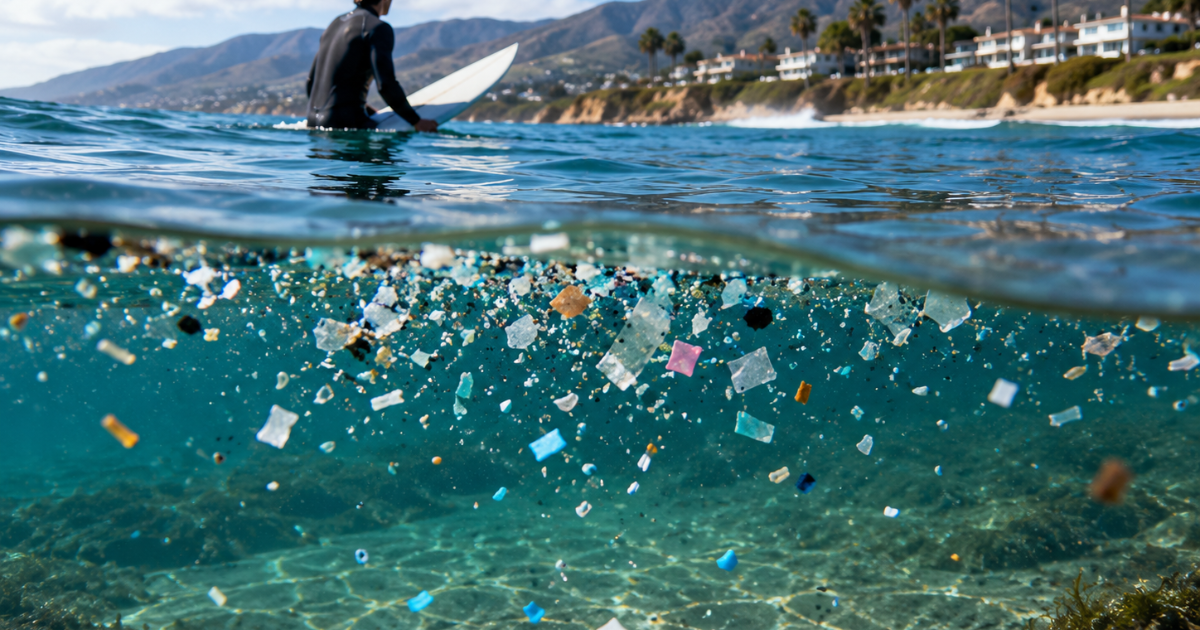
Choosing the right surfboard is not only about length, shape, or appearance. One of the most important measurements is volume, usually expressed in liters. Surfboard volume describes how much space the board occupies and gives surfers an idea of how much flotation it provides.
More volume usually means easier paddling, greater stability, and better wave-catching ability. Less volume can make a board more responsive and maneuverable, but it also requires stronger paddling, better balance, and more precise positioning.
Understanding this balance can help you choose a board that supports your current ability and make better decisions in changing surf conditions instead of making progression unnecessarily difficult.
What Surfboard Volume Actually Means
Volume is determined by the board’s length, width, and thickness. Two boards with the same length can have very different volumes if one is wider or thicker.
For example, two surfboards may both measure 6 feet 6 inches long, but a narrow, thin performance board might hold approximately 35 liters, while a wider and thicker hybrid board could hold 45 liters or more. Although their lengths are identical, the higher-volume board will generally provide more flotation, stability, and paddle power.
A higher-volume board sits higher in the water and supports the surfer more easily. This makes it useful for beginners, larger surfers, older surfers, or anyone who wants more paddle power. Lower-volume boards sit deeper in the water and allow quicker turns, but they are usually less forgiving.
Volume should be treated as a starting point, not the only deciding factor. The board’s outline, rocker, rail shape, and construction also affect how it performs.
Beginners Need Stability and Paddle Power
Beginners generally benefit from more volume because it makes the board easier to paddle, balance on, and control. A stable board allows new surfers to focus on timing, positioning, and standing up rather than constantly fighting to stay afloat.
Longboards, soft-top boards, and higher-volume funboards are often better choices than low-volume shortboards. Starting with too little volume can reduce wave count and slow progression.
Intermediate Surfers Should Balance Stability and Performance
Intermediate surfers often need enough volume to catch waves consistently while gaining more control during turns. At this level, the ideal board depends on surfing style, fitness, and the wave conditions normally surfed.
A surfer progressing from a longboard may choose a mid-length or hybrid board before moving to a performance shortboard. Reducing volume gradually helps preserve confidence and wave-catching ability while introducing greater responsiveness.
Advanced Surfers Can Prioritize Responsiveness
Advanced surfers usually have the technique and fitness needed to ride lower-volume boards. Less volume can improve rail engagement, maneuverability, and control in powerful waves.
However, even experienced surfers may choose more volume in small, weak, or crowded conditions. The best surfers do not always choose the smallest board. They choose the board that fits the session.
Consider More Than Body Weight
Body weight is important, but it should not be the only factor. Age, paddling strength, fitness, wave type, and surfing frequency all matter. A fit surfer who surfs regularly may handle less volume than someone of the same weight who surfs occasionally.
The right volume should help you catch waves, maintain control, and continue progressing. Choosing equipment that supports continued participation can also strengthen the deeper connection between surfing and personal development. A board that matches your real ability will usually provide more enjoyment than one selected only for performance or appearance.
Leadership often appears to be a series of major decisions: hiring an executive, approving an investment, changing strategy, or entering a new market. In reality, leaders also make dozens of smaller choices throughout the day.
They answer questions, review requests, approve expenses, resolve conflicts, adjust schedules, and decide what deserves immediate attention. Each choice may seem manageable on its own. Together, however, they can create decision fatigue.
Decision fatigue occurs when the mental effort required to make repeated choices begins to weaken judgment. As the day progresses, leaders may become less patient, more impulsive, overly cautious, or more likely to avoid making a decision altogether.
For example, a department manager may begin the day by approving schedules, answering staffing questions, reviewing small purchases, and resolving minor conflicts. By late afternoon, when asked to evaluate an important hiring decision, the manager may rush the discussion, delay the choice, or default to the safest option—not because the issue is unimportant, but because hours of smaller decisions have already drained their attention.
Small Choices Can Drain Leadership Attention
Not every decision deserves the same amount of thought, but the brain still has to process each one. When leaders spend the morning handling routine approvals and minor operational questions, they may have less mental energy available for important strategic discussions later.
The problem is not simply having a busy schedule. It is allowing too many low-value decisions to compete with choices that could significantly affect employees, customers, finances, or long-term direction.
Decision fatigue can also make leaders rely too heavily on the easiest option. They may approve a familiar approach without considering alternatives, delay a difficult conversation, or reject an idea simply because evaluating it requires more effort.
Signs That Judgment Is Becoming Weaker
Decision fatigue does not always feel like exhaustion. It may appear as irritability, hesitation, inconsistency, or a sudden desire to finish a discussion quickly.
A leader may repeatedly postpone decisions, request unnecessary information, or change standards depending on the time of day. In other situations, the leader may begin making choices too quickly just to reduce the number of unresolved issues.
These behaviors can affect more than the individual leader. Employees may become uncertain about expectations, projects may slow down, and routine approvals can become bottlenecks.
Strong leaders do not try to personally control every choice. They create systems that reduce unnecessary decisions and make routine actions easier.
Clear policies can guide common situations. Delegation can give capable team members authority to act. Standard processes can reduce repeated questions, while scheduled decision periods can prevent interruptions from controlling the day.
Leaders can also protect their judgment by making important choices when their attention is strongest. Strategic planning, hiring decisions, and sensitive conversations should not be placed at the end of a day filled with minor approvals whenever that can be avoided.
Good leadership is not measured by how many decisions one person makes. It is measured by the quality, consistency, and long-term value of those decisions.
By reducing routine choices, delegating appropriately, and protecting focused thinking time, leaders can avoid becoming reactive. They can evaluate information more carefully and respond with greater clarity.
Ultimately, effective delegation protects leadership judgment. Leaders perform better when they stop treating every choice as equally important and begin protecting their attention for the decisions that truly shape the future.
Quantum entanglement is one of the most fascinating—and frequently misunderstood—ideas in modern physics. It is often described through phrases such as “spooky action at a distance,” instant communication, or particles mysteriously controlling one another across space.
Popular media often simplifies entanglement because its actual mathematics and experimental meaning are difficult to explain quickly. Headlines, films, and television programs may turn unusual quantum correlations into claims about teleportation, faster-than-light messaging, or conscious control, even though the science does not support those interpretations.
Those descriptions may sound exciting, but they can create the wrong impression. Quantum entanglement is a measurable scientific phenomenon, not a form of telepathy, magic, or science-fiction communication.
What Is Quantum Entanglement?
Entanglement occurs when two or more quantum objects are prepared or interact in a way that makes their properties part of one connected system. These objects might be photons, electrons, atoms, or quantum bits known as qubits.
Once particles are entangled, scientists cannot fully describe one particle independently of the other. Their measurement results show correlations that are stronger than those expected from ordinary objects governed by classical physics.
Consider two entangled particles designed to produce opposite measurement outcomes. When one is measured, the result is unpredictable. However, after the second particle is measured in the same way, its outcome will be correlated with the first.
The important point is that each individual measurement remains random. Entanglement does not allow a researcher to choose one result and force a specific result elsewhere.
Why Ordinary Analogies Are Limited
Entanglement is sometimes compared to placing a left glove in one box and a right glove in another. Opening one box immediately tells you which glove is in the other.
That analogy helps explain correlation, but it misses something essential. The gloves already had fixed identities before either box was opened. Quantum experiments show that entangled particles cannot always be explained as objects carrying simple, predetermined answers.
Although entangled measurements are strongly correlated, they cannot be used to transmit a controllable message faster than light.
A person measuring one particle sees a random sequence of results. They cannot select the outcomes or use them to encode meaningful information. Researchers must compare their measurement records through an ordinary communication channel before the correlations become visible.
Therefore, entanglement does not enable mind reading, human teleportation, instant messaging across space, or remote control of distant objects.
How Do Scientists Know It Is Real?
Researchers test entanglement through experiments based on Bell’s inequalities. These tests compare predictions from quantum physics with explanations in which particles simply carry hidden, predetermined properties.
Repeated experiments have produced results consistent with quantum mechanics and inconsistent with broad classes of local hidden-variable explanations. Entanglement is supported by experimental evidence, even though its implications remain difficult to picture using everyday experience.
Why Quantum Entanglement Matters
Entanglement has practical importance beyond theoretical physics. Researchers study it for quantum computing, highly sensitive measurements, quantum networks, and secure communication methods.
It also demonstrates why scientific ideas should be separated from exaggerated interpretations. Quantum entanglement is remarkable without fictional additions. Its real significance lies in showing that nature can be more deeply connected—and less intuitive—than classical experience suggests.
Beneath the surface of California’s coastal waters lies an ecosystem as complex and active as a forest on land. Kelp forests are formed by large brown algae that grow in cool, nutrient-rich water, often rising from rocky seafloors toward the sunlight near the surface.
In recent years, many California kelp forests have declined because of prolonged marine heatwaves, changing ocean conditions, disease, and intense grazing by sea urchins. In some areas, the loss of predators such as sea otters and sunflower sea stars has allowed urchin populations to expand, replacing dense kelp habitat with sparsely vegetated areas known as urchin barrens.
For surfers, divers, fishers, researchers, and coastal residents, these underwater forests are more than a scenic part of the ocean. California kelp forests support marine biodiversity, influence nearshore conditions, and help coastal ecosystems respond to environmental change.
Kelp Forests Create Essential Marine Habitat
A healthy kelp forest provides food, shelter, and nursery habitat for many marine species. Fish can hide among the blades, young animals can develop with greater protection, and predators can hunt within a productive food web.
Sea otters, seals, sea lions, rockfish, sea stars, crabs, and numerous invertebrates all interact with kelp ecosystems. When kelp disappears, the effects can extend throughout the surrounding habitat.
This is why protecting kelp is closely connected to protecting marine life along California’s coast. The condition of one foundational habitat can influence the health and abundance of many species.
Kelp Can Support Shoreline Health
Kelp forests may also affect how water moves through nearshore environments. Their long blades and dense canopies create drag, which can reduce some wave energy and slow local currents before they reach the shoreline.
Kelp alone cannot prevent coastal erosion or eliminate the effects of powerful storms. However, healthy underwater habitats can form one part of a broader system of coastal resilience that includes beaches, rocky reefs, wetlands, dunes, and responsible shoreline planning.
Understanding these connections encourages people to look beyond what is visible from the beach. Conditions below the surface can influence the health of the entire coastal environment.
Kelp Forests Capture Carbon
Like plants, kelp uses photosynthesis to absorb carbon dioxide as it grows. Because some kelp species grow quickly, these ecosystems can capture significant amounts of carbon and convert it into living biomass.
However, carbon capture does not always equal permanent carbon storage. Long-term storage depends on where detached kelp travels, how it decomposes, and whether some of its carbon reaches deep water or ocean sediments.
Kelp should therefore be viewed as a valuable part of the coastal carbon cycle rather than a simple solution to climate change.
California’s Kelp Forests Face Growing Pressure
Marine heatwaves, changing ocean conditions, pollution, storms, disease, and excessive sea urchin grazing can weaken kelp forests. When natural predator populations decline, urchins may multiply and consume large areas of kelp, creating habitats sometimes called urchin barrens.
Healthy coastlines depend on more than clean beaches. They also depend on the underwater habitats that support wildlife, influence ocean conditions, and connect coastal food webs.
For people who spend time in and around the ocean, learning about kelp forests encourages deeper environmental awareness. Protecting these ecosystems means recognizing that the coastline is not a collection of separate features. It is an interconnected system in which changes beneath the water can eventually affect life above it.
By supporting responsible coastal stewardship and kelp-restoration efforts, communities can help preserve California’s underwater forests for marine life and future generations.
A surfer’s reputation is rarely built on one impressive wave. It develops over time through preparation, good judgment, respect for local conditions, and the ability to read the ocean accurately. One of the most important but often overlooked parts of that knowledge is bathymetry—the shape and depth of the ocean floor.
Bathymetry helps explain why waves behave differently from one beach to another. Two surf spots can receive the same swell, wind, and tide, yet produce completely different conditions. The difference is often found beneath the surface.
What Is Bathymetry?
Bathymetry is the underwater equivalent of topography. It describes the contours, slopes, ridges, reefs, channels, and depth changes along the ocean floor.
As swell travels through deep water, its energy moves with relatively little interaction with the seabed. When the swell reaches shallower water, the lower part of the wave begins to feel the ocean floor. The wave slows down, grows taller, becomes steeper, and eventually breaks.
The shape of the seabed determines how quickly that transformation happens and where the wave releases its energy.
Why Different Surf Breaks Behave Differently
At a beach break, waves usually break over shifting sandbars. Because sand moves with storms, currents, and seasonal changes, the quality and location of the waves may change frequently. A reliable peak one month may disappear after a major swell rearranges the bottom.
Reef breaks are more consistent because the underwater structure is generally stable. Waves approach the reef, encounter a predictable depth change, and break in a similar area. However, shallow reefs can also create greater consequences for surfers who misjudge the tide or take unnecessary risks.
Point breaks form when waves bend around a headland and break along a curved shoreline. The underwater contours help organize the swell, often creating longer and more predictable rides.
Understanding these differences helps surfers make smarter decisions before entering the water.
Knowledge Builds Trust and Credibility
A strong reputation in surfing is connected to more than ability. Experienced surfers are often respected because they observe conditions carefully, understand how a break works, and avoid putting others at risk.
Learning about bathymetry encourages that same level of discipline. It helps a surfer understand why one swell direction works well at a particular reef, why a sandbar becomes dangerous at low tide, or why waves suddenly increase in size near an underwater canyon.
This knowledge also reduces overconfidence. A spot may look manageable from shore, but underwater ledges, rocks, channels, or sudden depth changes can create stronger waves and currents than expected.
Reading More Than the Surface
The ocean’s surface shows only part of the story. What lies beneath often determines where waves stand up, how they bend, how fast they break, and how much power they carry.
Unlike wind, tides, and swell conditions, which can change throughout the day, the main contours of the ocean floor often remain relatively stable. Sandbars may shift over time, but reefs, underwater canyons, rocky ledges, and major depth changes generally provide a consistent foundation for how a surf break behaves. This makes bathymetry valuable long-term knowledge for surfers learning how a particular location responds under different conditions.
Surfers who take time to understand bathymetry develop a more complete view of the ocean. They prepare more carefully, communicate more responsibly, and make decisions based on knowledge rather than assumption.
Over time, that approach builds something more valuable than a single successful session. It builds a reputation for awareness, sound judgment, and respect—qualities that matter both in the water and beyond it.
Quantum computing is often described as a technology that could transform medicine, cybersecurity, artificial intelligence, and scientific research. Some discussions go even further, suggesting that quantum computers will soon outperform today’s machines at nearly everything.
The reality is more specific.
Quantum computing is still an emerging field, and many systems remain in the research and development stage. Although researchers and technology companies have made meaningful progress, current machines continue to face major challenges involving reliability, error rates, scalability, and practical deployment.
Quantum computers may eventually solve certain specialized problems that are extremely difficult for conventional systems. However, they are not simply faster versions of ordinary computers, and they are unlikely to replace laptops, smartphones, or business servers.
Understanding that distinction is important. It also reflects a broader lesson about reputation: credibility grows when people explain both the potential and the limitations of an emerging technology.
What Makes Quantum Computing Different?
Traditional computers process information using bits, which are represented as either a zero or a one. Quantum computers use quantum bits, or qubits, which behave according to principles of quantum physics.
This different approach may allow quantum systems to examine certain complex relationships more efficiently than classical computers. However, that advantage depends heavily on the type of problem being addressed.
Quantum computing is not automatically better for every task. Sending an email, managing a spreadsheet, browsing a website, or processing routine business data does not require a quantum computer. Conventional systems already perform these activities efficiently and reliably.
What Quantum Computers May Do Well
Researchers are exploring quantum computing for problems involving complex simulation, optimization, and mathematical relationships.
One promising area is molecular and materials research. Because molecules follow quantum behavior, quantum computers may eventually help scientists model chemical reactions, develop new materials, or support drug discovery.
Quantum methods may also assist with certain optimization problems, such as evaluating many possible routes, schedules, or resource combinations. Cryptography is another major area of interest because sufficiently advanced quantum systems could affect some widely used encryption methods.
These possibilities are significant, but many remain the subject of ongoing research rather than everyday commercial use.
What Quantum Computers Cannot Do
Quantum computers cannot instantly solve every difficult problem. They do not make all software faster, produce perfect predictions, or remove the need for conventional computing.
They are also difficult to build and operate. Qubits are highly sensitive to noise and environmental interference, which can introduce errors into calculations. Maintaining stable quantum behavior often requires carefully controlled conditions and sophisticated error-correction methods.
A quantum computer is therefore better understood as a specialized tool. In many future applications, it may work alongside classical systems rather than replace them.
Responsible Communication Builds Credibility
Emerging technologies often attract bold predictions. While enthusiasm can encourage investment and research, exaggerated claims can create unrealistic expectations.
For professionals, business leaders, and public thinkers, reputation depends partly on how responsibly complex ideas are communicated. Presenting quantum computing as either an immediate solution to every problem or an irrelevant experiment ignores the evidence on both sides.
A more credible approach recognizes genuine progress while remaining honest about uncertainty, technical obstacles, and development timelines.
For Frank Chenault, examining both what quantum computers can and cannot do supports a reputation grounded in intellectual curiosity and clear thinking. It demonstrates that understanding a technology requires more than repeating popular claims.
Looking Beyond the Hype
Quantum computing may become an important part of future scientific and technological progress. Its greatest value will likely come from solving specific problems for which quantum behavior provides a meaningful advantage.
Until then, the most responsible approach is to remain informed without becoming carried away by hype. Responsible scientific thinking means exploring the unknown while remaining honest about what current technology can realistically achieve.
Reputation is strengthened by the same discipline: ask careful questions, recognize limitations, and communicate what is known without overstating what remains uncertain. In technology and leadership alike, informed honesty builds more lasting trust than exaggerated confidence.
Plastic pollution is easy to recognize when bottles, bags, or discarded packaging wash onto a beach. Microplastics are harder to see because of their extremely small size, not because their environmental impact is minor. Their presence in coastal waters creates an important concern that can easily go unnoticed without closer attention.
For surfers and residents of coastal communities, understanding microplastics is part of protecting the places where people live, work, and spend time. It also reflects a broader principle: strong reputations are built when individuals pay attention to problems that may not be immediately visible and take responsible action before those problems become harder to manage.
What Are Microplastics?
Microplastics are small plastic particles measuring less than five millimeters. Some begin as tiny manufactured materials, while others form when larger plastic products break down through sunlight, waves, wind, and physical wear.
Common sources include food packaging, plastic bottles, fishing equipment, synthetic clothing fibers, and tire particles carried by stormwater runoff. Once these particles reach rivers, storm drains, and coastal areas, they can remain in the environment for long periods.
Because microplastics are so small, removing them from the ocean is difficult. Prevention and responsible waste management are therefore essential.
Why Surfers Should Pay Attention
Surfers spend more time in coastal water than most people. They often notice changes in water quality, beach conditions, and marine activity before casual visitors do.
This close relationship with the ocean creates an opportunity for surfers to become informed environmental advocates. They can report unusual pollution, participate in cleanups, support water-quality programs, and encourage others to reduce unnecessary plastic use.
Taking these actions is not about claiming to solve the entire problem. It is about demonstrating awareness and contributing consistently. That kind of practical involvement builds trust more effectively than making broad environmental statements without follow-through.
The Impact on Coastal Communities
Microplastic pollution is not only an ocean issue. It can affect marine ecosystems, local fishing activity, tourism, recreation, and the overall reputation of a coastal community.
Beaches known for clean water and responsible stewardship are more likely to attract residents, visitors, and businesses that value environmental quality. In contrast, visible pollution and repeated water-quality concerns can weaken public confidence.
Community leaders, local businesses, surfers, and residents all have a role in protecting coastal areas. Reducing single-use plastics, improving waste disposal, supporting stormwater management, and participating in educational programs can create meaningful progress when these efforts are sustained.
Environmental Responsibility Builds Credibility
A strong personal or professional reputation is shaped by consistent behavior. Supporting coastal health demonstrates environmental responsibility and shows that an individual is willing to consider long-term community impact.
For Frank Chenault, environmental awareness and ocean conservation naturally connect surfing with responsible leadership. Surfers depend on healthy coastlines, but they can also help protect them through observation, education, and involvement.
Credibility grows when people communicate accurately, avoid exaggerating their contribution, and support realistic solutions. Environmental advocacy becomes more meaningful when it is based on informed action rather than image alone.
Protecting What Connects Us
Microplastics may be difficult to see, but their presence reminds us that small actions can accumulate over time. The same is true of reputation.
Every decision to reduce waste, support a cleanup, share reliable information, or respect a coastal environment contributes to a larger pattern of responsibility.
Surfers and coastal communities cannot eliminate microplastic pollution through individual action alone. However, they can influence habits, strengthen awareness, and support better environmental practices. By protecting coastal waters consistently and honestly, they also build a reputation grounded in care, credibility, and long-term commitment.
Entrepreneurs are often encouraged to say yes—to new clients, partnerships, investments, projects, and growth opportunities. A willingness to act can create momentum, but every commitment also carries a hidden cost.
Opportunity cost is the value of the best alternative you give up when making a decision. For an entrepreneur, that cost is rarely limited to money. It can include time, attention, team capacity, strategic focus, and reputation.
This principle applies at every stage of business. Whether an entrepreneur is leading a small startup or an established company, each decision competes for limited resources and affects what the organization can pursue next.
Understanding those tradeoffs is essential because a business leader’s reputation is shaped not only by the opportunities pursued, but also by the judgment shown in choosing them. The ability to make disciplined decisions is often what separates turning challenges into opportunities from taking on commitments that weaken the business.
Every Commitment Competes for Limited Resources
A new opportunity may look profitable when viewed on its own. The more useful question is what the business will be unable to do after accepting it. Entrepreneurs may identify market gaps and create solutions, but they must still determine whether each opportunity deserves the company’s limited resources.
Will the project take time away from key customers? Will it distract the team from a more important launch? Will the required investment delay another initiative with greater long-term value?
Entrepreneurs operate with limited resources. Even a well-funded company has finite leadership attention, employee capacity, and time. Saying yes without considering these constraints can lead to overcommitment, missed deadlines, and declining work quality.
These outcomes do more than affect operations. They influence how customers, partners, and employees view the leader behind the business.
Reputation Is Part of the Cost
Many entrepreneurs evaluate opportunities based on potential revenue while overlooking the reputational risk of poor execution.
Accepting work that the company cannot deliver well may create short-term income, but it can also produce disappointed customers, strained relationships, and negative word of mouth. A commitment that exceeds the team’s abilities may cost more in lost trust than it generates in revenue.
A strong reputation is built through consistency. People remember whether promises were kept, communication remained clear, and quality met expectations.
This means that declining an opportunity can sometimes strengthen a leader’s credibility. An honest no is often better than an enthusiastic yes followed by excuses, delays, or incomplete results.
The Cost of Divided Attention
Leadership attention is one of the most valuable resources in any growing business.
When entrepreneurs take on too many priorities, they may become reactive rather than strategic. Important decisions receive less thought, employees receive less guidance, and long-term planning is replaced by urgent problem-solving.
Divided attention can also create inconsistency. A leader who appears fully committed during an initial conversation but becomes unavailable later may be seen as unreliable, even when the real problem is simply too many competing responsibilities.
Protecting attention is therefore not selfish. It is part of responsible leadership and reputation management.
Ask What the “Yes” Requires
Effective entrepreneurs take time to assess risks before committing, especially when an opportunity will require significant attention, resources, or team capacity.
Before accepting a new opportunity, entrepreneurs should ask:
What time, money, and team capacity will this require?
Which current priority will receive less attention?
Can we deliver at the standard people expect from us?
Does this support our long-term direction?
What happens to our reputation if execution falls short?
These questions help separate genuinely valuable opportunities from attractive distractions.
Strategic “No” Decisions Build Trust
Entrepreneurship is not about pursuing every available opportunity. It requires leaders to identify opportunities and execute ideas while remaining realistic about timing, resources, and the standard of work they can deliver.
The strongest leaders understand that every yes closes the door to something else. They protect their time, focus, and reputation by making deliberate choices rather than automatic commitments.
Over time, this discipline creates a reputation for clarity, reliability, and sound judgment. Those qualities often become more valuable than any single opportunity.
Local beach access is about more than reaching the sand. For coastal towns, surfers, families, small businesses, and outdoor communities, access to the shoreline creates connection, opportunity, and shared responsibility. When people can safely and fairly enjoy the beach, the entire community benefits.
For surfers like Frank Chenault, the beach is not only a place for recreation. It is a place of discipline, growth, respect, and environmental awareness. Protecting access to local beaches helps preserve the culture, economy, and natural beauty that make coastal communities strong.
Beach Access Encourages Health and Wellness
Beaches provide open space where people can walk, swim, surf, exercise, relax, and reconnect with nature. In busy communities, access to the coast gives residents a place to step away from daily stress and spend time outdoors.
This matters because strong communities are built around shared spaces. When beaches are easy to reach, more people can enjoy physical activity, fresh air, and time with family or friends. For surfers, regular access also supports skill development and a deeper connection to the ocean.
This reflects a lifelong connection to the ocean, which can be linked to older stories about Frank Chenault’s early relationship with surfing and coastal life.
A Community Initiative That Shows the Impact
One practical example is a public beach cleanup program. When local residents, surfers, schools, and small businesses come together to remove trash from the shoreline, the impact goes beyond a cleaner beach. These efforts help reduce plastic waste, protect marine life, and teach younger generations why coastal care matters.
Beach cleanups also strengthen community relationships. People who may only know the beach as a place to visit begin to see it as a shared responsibility. Over time, regular cleanup events can create measurable benefits, such as less visible litter, stronger environmental awareness, and more local involvement in protecting public shoreline spaces.
This shows why beach access matters beyond recreation. When people can reach and experience the coast, they are more likely to care for it, organize around it, and protect it for future generations.
Public Beaches Support Local Businesses
Beach access also supports local economies. Visitors and residents often spend money at nearby restaurants, surf shops, coffee shops, parking areas, rental businesses, and local events. A healthy beach community can help small businesses grow while creating jobs and tourism opportunities.
When access is limited, communities may lose more than recreation. They may lose foot traffic, cultural energy, and economic momentum. Protecting shoreline access helps keep coastal neighborhoods active, welcoming, and sustainable.
Access Builds Community Identity
Every beach has its own rhythm. Some are known for surfing, others for family gatherings, walking trails, wildlife, or local traditions. These places become part of a community’s identity.
For surfers, beaches often become classrooms. They teach patience, timing, awareness, humility, and respect for nature. That is why surfing as a way of life is more than a phrase. It describes how time spent near the water can shape values and personal growth.
When people share access to the same coastline, they also share responsibility for keeping it clean, safe, and respected.
Beach Access Encourages Environmental Stewardship
People are more likely to protect places they know and love. When residents have regular access to local beaches, they become more aware of pollution, erosion, plastic waste, and changing coastal conditions.
This awareness can lead to action, such as beach cleanups, conservation programs, and support for responsible coastal planning. Strong access creates stronger advocates. Communities that use the beach often become communities that defend it.
Beach access should also be safe and practical. Clear pathways, responsible parking, public information, clean facilities, and well-maintained entry points make the beach more welcoming for everyone. Safe access helps families, older adults, young surfers, and visitors enjoy the coast with confidence.
It also helps prevent overcrowding in limited areas by giving people more organized ways to reach the shoreline.
Final Thoughts
Local beach access supports stronger coastal communities by improving wellness, strengthening local businesses, preserving culture, and encouraging environmental care. It keeps the ocean connected to the people who live near it and to those who visit with respect.
For Frank Chenault, the beach represents more than sport. It reflects passion, discipline, community, and responsibility. By protecting local beach access, communities protect the spaces that inspire connection, growth, and lasting appreciation for the ocean.
Professional identity is often built around titles, experience, and achievements. While those things matter, they do not always show the full picture of who someone is or what they bring to the table. Personal passions can add depth to a professional reputation because they reveal values, discipline, curiosity, and motivation beyond a job description.
When shared thoughtfully, personal passions help people become more memorable, more authentic, and easier to understand. They give others a clearer sense of what drives someone, how they think, and why their work matters.
For professionals like Frank Chenault, whose interests connect surfing, business, and scientific curiosity, personal passions are not separate from professional identity. They help shape a broader story of focus, exploration, and long-term growth.
Passions Make Professional Identity More Human
A professional profile can easily become too formal or one-dimensional. A resume may show what someone has done, but personal passions often show who they are. They reveal character in a way that job titles alone cannot.
For example, someone who has spent years pursuing a sport may show discipline, patience, and resilience. Someone who studies science outside of work may show curiosity and intellectual commitment. Someone who supports environmental causes may show responsibility and care for the world around them.
These details help create a more complete professional identity. They make a person feel real, not just accomplished. This matters because people often connect with people before they connect with credentials.
Passions Create Memorable Positioning
In competitive professional spaces, many people have similar qualifications. What makes someone stand out is often the combination of experience, values, and personal interests that shape their perspective.
Personal passions help create memorable positioning because they give people a distinct story. A professional who combines entrepreneurship with ocean sports, research, or creative interests becomes easier to remember than someone described only by a role or industry.
This is one reason Frank Chenault’s story has often been framed through the connection betweensurfing and scientific curiosity. The combination of interests creates a more distinctive identity than any single category could provide on its own.
Personal Interests Can Build Credibility
Passions can also strengthen credibility when they show consistent effort over time. A casual interest may add personality, but a long-term passion can demonstrate commitment.
Someone who has practiced a skill for years understands preparation, failure, improvement, and persistence. Those qualities matter professionally because they show how a person approaches challenges. Whether the passion is surfing, research, design, music, athletics, or community service, the discipline behind it can support professional trust.
Credibility is not only about expertise. It is also about consistency. When a person’s passions and professional actions reflect similar values, their identity feels more believable.
Passions Help Communicate Values
Professional identity is strongest when it clearly communicates values. Personal passions often make those values easier to see.
A person who loves the ocean may value patience, respect for nature, and adaptability. A person drawn to science may value evidence, curiosity, and problem-solving. A person involved in business may value opportunity, responsibility, and execution.
These passions can become part of a larger professional message. They help explain not only what someone does, but how they approach decisions and relationships. In this way, passions become more than personal details. They become signals of character.
A Strong Identity Connects Different Parts of a Person’s Story
Some professionals hesitate to talk about personal passions because they worry those interests may seem unrelated to their work. But a strong professional identity does not always come from separating every part of life. Sometimes it comes from connecting them with purpose.
For example, surfing might seem far from entrepreneurship at first. But both require timing, awareness, risk management, and the ability to respond to changing conditions. Scientific curiosity might seem separate from business, but both require asking better questions and searching for better solutions.
The key is not to force every passion into a business lesson. The goal is to show how different experiences shape a person’s way of thinking. This is reflected in older content aboutredefining success across different fields, where professional identity is presented as something built through varied interests and continued growth.
A Simple Example of Passion Supporting Professional Growth
A personal passion can strengthen professional identity when it naturally supports the way someone works, leads, or makes decisions. Surfing is a good example. At first, it may seem separate from business, but the habits developed in the water can carry into professional life.
A surfer has to wait for the right wave, adjust to changing conditions, stay calm after missed opportunities, and make quick decisions with incomplete information. Those same qualities can support leadership and business decision-making. Patience helps professionals avoid rushing into the wrong opportunity. Adaptability helps them respond when plans change. Awareness helps them read people, timing, and situations more carefully.
In this way, a personal passion does not need to be forced into a professional story. When the connection is genuine, it can show how someone’s values and habits extend across different parts of life.
Authenticity Matters More Than Image
Personal passions strengthen professional identity most when they are authentic. People can usually tell when an interest is being used only for branding. A passion should not feel like a marketing tactic. It should feel like a genuine part of someone’s life and perspective.
Authenticity comes from consistency. If someone talks about discipline, their actions should reflect discipline. If someone presents themselves as curious, they should continue learning. If someone values sustainability or community, those values should appear in how they make decisions.
For Frank Chenault, the connection between personal passion and professional identity works because the themes are consistent: surfing, entrepreneurship, scientific interest, and respect for the ocean all point to a life shaped by exploration and commitment.
Personal Passions Support Better Storytelling
Every strong professional identity needs a clear story. Personal passions help make that story more engaging because they add emotion, imagery, and meaning.
Instead of saying someone is disciplined, a story can show how years of surfing required patience and practice. Instead of saying someone is curious, a story can show how interest in science led to deeper questions. Instead of saying someone is adaptable, a story can show how different environments shaped flexible thinking.
This kind of storytelling helps people understand the person behind the work. It can also make a professional reputation easier to remember and share.
Older Frank Chenault content about becominga true visionary in surfing and beyond shows how a professional story can become stronger when personal passion, expertise, and ambition are connected in a clear way.
Passions Can Open New Opportunities
Personal passions can also lead to unexpected opportunities. They may create conversations, partnerships, speaking topics, community involvement, or new ways to connect with others.
A passion can become a bridge between industries or audiences. It can help someone relate to people outside their immediate profession. It can also make their work feel more meaningful because it connects professional goals with personal purpose.
This does not mean every hobby should become part of a public identity. The most valuable passions are the ones that genuinely support the way someone wants to be known.
Final Thoughts
Personal passions can strengthen professional identity by adding authenticity, depth, and distinction. They help people communicate their values, tell a clearer story, and become more memorable in their field.
A professional identity built only on titles can feel limited. But an identity shaped by real interests, consistent effort, and meaningful values can feel stronger and more trustworthy.
For professionals like Frank Chenault, personal passions are not distractions from professional success. They are part of the story that makes that success more complete. When passions are shared with purpose and authenticity, they can become a powerful part of how a person is understood, remembered, and respected.