
Why California’s Kelp Forests Matter for Marine Life and Coastal Resilience
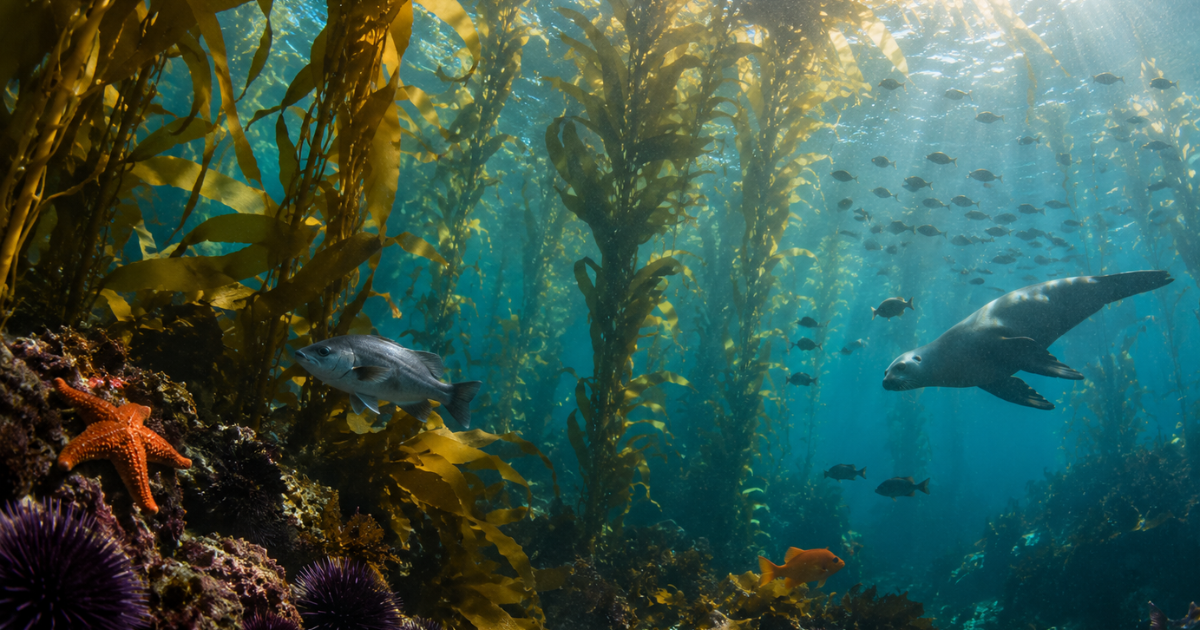
Beneath the surface of California’s coastal waters lies an ecosystem as complex and active as a forest on land. Kelp forests are formed by large brown algae that grow in cool, nutrient-rich water, often rising from rocky seafloors toward the sunlight near the surface.
In recent years, many California kelp forests have declined because of prolonged marine heatwaves, changing ocean conditions, disease, and intense grazing by sea urchins. In some areas, the loss of predators such as sea otters and sunflower sea stars has allowed urchin populations to expand, replacing dense kelp habitat with sparsely vegetated areas known as urchin barrens.
For surfers, divers, fishers, researchers, and coastal residents, these underwater forests are more than a scenic part of the ocean. California kelp forests support marine biodiversity, influence nearshore conditions, and help coastal ecosystems respond to environmental change.
Kelp Forests Create Essential Marine Habitat
A healthy kelp forest provides food, shelter, and nursery habitat for many marine species. Fish can hide among the blades, young animals can develop with greater protection, and predators can hunt within a productive food web.
Sea otters, seals, sea lions, rockfish, sea stars, crabs, and numerous invertebrates all interact with kelp ecosystems. When kelp disappears, the effects can extend throughout the surrounding habitat.
This is why protecting kelp is closely connected to protecting marine life along California’s coast. The condition of one foundational habitat can influence the health and abundance of many species.
Kelp Can Support Shoreline Health
Kelp forests may also affect how water moves through nearshore environments. Their long blades and dense canopies create drag, which can reduce some wave energy and slow local currents before they reach the shoreline.
Kelp alone cannot prevent coastal erosion or eliminate the effects of powerful storms. However, healthy underwater habitats can form one part of a broader system of coastal resilience that includes beaches, rocky reefs, wetlands, dunes, and responsible shoreline planning.
Understanding these connections encourages people to look beyond what is visible from the beach. Conditions below the surface can influence the health of the entire coastal environment.
Kelp Forests Capture Carbon
Like plants, kelp uses photosynthesis to absorb carbon dioxide as it grows. Because some kelp species grow quickly, these ecosystems can capture significant amounts of carbon and convert it into living biomass.
However, carbon capture does not always equal permanent carbon storage. Long-term storage depends on where detached kelp travels, how it decomposes, and whether some of its carbon reaches deep water or ocean sediments.
Kelp should therefore be viewed as a valuable part of the coastal carbon cycle rather than a simple solution to climate change.
California’s Kelp Forests Face Growing Pressure
Marine heatwaves, changing ocean conditions, pollution, storms, disease, and excessive sea urchin grazing can weaken kelp forests. When natural predator populations decline, urchins may multiply and consume large areas of kelp, creating habitats sometimes called urchin barrens.
Protecting kelp requires careful observation of changing coastal conditions, responsible fishing and pollution practices, ecosystem restoration, and continued scientific research.
Protecting the Ecosystem Beneath the Waves
Healthy coastlines depend on more than clean beaches. They also depend on the underwater habitats that support wildlife, influence ocean conditions, and connect coastal food webs.
For people who spend time in and around the ocean, learning about kelp forests encourages deeper environmental awareness. Protecting these ecosystems means recognizing that the coastline is not a collection of separate features. It is an interconnected system in which changes beneath the water can eventually affect life above it.
By supporting responsible coastal stewardship and kelp-restoration efforts, communities can help preserve California’s underwater forests for marine life and future generations.